Health and Safety Policy — Commercial Waste Borehamwood
Scope and Purpose
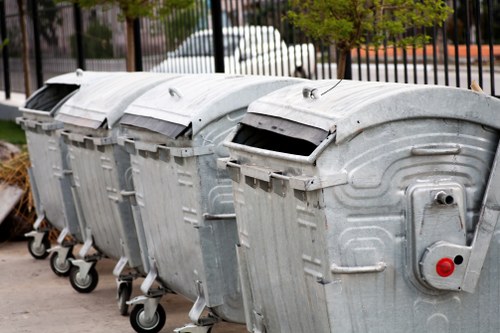 This Health and Safety Policy sets out the commitment of our organisation to deliver safe, compliant and efficient commercial waste services in Borehamwood and surrounding service areas. It applies to all staff, contractors and visitors involved in the collection, transport, storage and disposal of business and industrial refuse, recycling and specialist waste streams. The aim is to protect people, property and the environment through clearly defined responsibilities, safe systems of work and continuous improvement.
Our objectives include: minimising harm, preventing accidents and occupational ill-health, ensuring legal compliance and promoting best practice in waste management Borehamwood. Managers will provide resources and leadership, supervisors will enforce safe methods and employees must follow procedures and report hazards. This policy is supported by detailed operating procedures, risk assessments and training records that are readily available to all staff.
 Risk assessment is central to our approach. We identify, evaluate and control hazards associated with collections, on-site segregation, container handling, vehicle operations and site activities. Typical risks include manual handling, slips/trips, vehicle movement, hazardous substances and fire. Controls are implemented using a hierarchy: elimination, substitution, engineering, administrative measures and personal protective equipment (PPE).
Responsibilities are allocated as follows: senior management ensures policy implementation and resource allocation; operations managers maintain safe systems for rubbish removal Borehamwood activities; supervisors oversee day-to-day compliance; drivers and operatives follow safe working instructions; and the health and safety officer monitors performance and leads investigations. Everyone is expected to participate in safety briefings and raise concerns via established reporting channels.
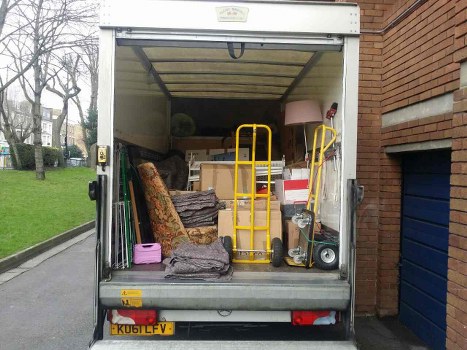
Training and Competence
We maintain a structured training programme to ensure staff are competent to perform commercial rubbish collections. Induction training covers company rules, PPE, reporting, emergency procedures and site-specific risks. Ongoing training includes vehicle handling, manual handling techniques, safe use of lifting equipment and segregation of recyclables and hazardous materials. Regular toolbox talks and refresher sessions reinforce awareness.Personal protective equipment is provided where required and includes high visibility clothing, safety boots, gloves, eye protection and respiratory protection when needed. Equipment is maintained and replaced according to supplier guidance. Safe use of mechanical aids, secure fastening of loads and correct operation of compaction systems are emphasised in daily checks.
Vehicle safety and traffic management are critical for effective waste collection. Vehicles are inspected pre-shift, maintained to manufacturer standards and subject to scheduled servicing. Drivers follow safe routes, use banksman assistance in confined areas and ensure loads are secure to prevent spillage. Site-specific traffic plans control pedestrian and vehicle flow at customer premises and transfer stations.
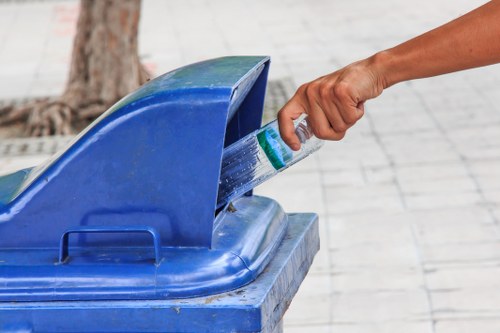 Emergency preparedness covers spill response, first aid, fire prevention and incident reporting. All incidents, near misses and non-conformances are reported and investigated promptly to identify root causes and corrective actions. First aid kits and spill containment equipment are available on vehicles and at depots. Evacuation procedures and muster points are communicated to staff and exercised periodically.
 Special waste streams such as chemical residues, asbestos-containing materials, clinical waste and contaminated soils are handled in accordance with strict segregation, labeling and containment protocols. Only authorised, trained personnel may manage hazardous loads and they follow safe transfer documentation. Where specialist disposal is required, approved brokers and licensed facilities are utilised to ensure safe onward processing.
Operational controls include daily checklists, permit-to-work systems for higher risk tasks and supervision of subcontractors. Contractors engaged for bin lifts, deep cleans or bulking are expected to meet our safety standards and provide evidence of competence, insurance and method statements. Performance is monitored through audits, inspections and routine site visits.
We promote a safety culture where communication and continuous improvement are valued. Employees are encouraged to suggest improvements, report unsafe conditions and participate in reviews. Performance metrics such as accident frequency, near-miss reports and audit results are tracked and used to set improvement targets for our commercial waste services in Borehamwood and the wider service area.
To support implementation we maintain clear documentation: risk assessments, safe systems of work, training records, vehicle maintenance logs and incident records. Policy review is scheduled annually or sooner if significant changes occur in operations, legislation or incident learnings. Management is committed to providing the resources necessary to achieve these objectives and to ensuring a safe working environment for all parties involved in rubbish removal Borehamwood operations.
This policy is a living document and forms the basis for safe, responsible and compliant delivery of commercial waste and rubbish collection services. It will be communicated to staff and made available to stakeholders as part of our ongoing commitment to health, safety and environmental stewardship.
- Key controls: risk assessment, training, PPE, vehicle maintenance.
- Reporting: incidents, near misses and non-compliance.
- Review: annual policy review and continuous improvement.
