Commercial Waste Borehamwood: Recycling and Sustainability
Commercial Waste Borehamwood services are evolving to meet the demand for an eco-friendly waste disposal area and a truly sustainable rubbish area. In Borehamwood and the wider Hertsmere borough, businesses expect more than basic rubbish removal: they want a measurable environmental approach, practical recycling solutions, and low-carbon logistics. Our local programme emphasises separation at source, reuse, and partnerships that keep materials circulating in the local economy while reducing landfill. This page outlines targets, facilities, and collaborations that make the Borehamwood commercial rubbish landscape greener and more efficient.We set an ambitious recycling percentage target for commercial operations in the town: a 65% recycling rate for non-hazardous commercial waste by 2030. That target is aligned with borough priorities and reflects the combined efforts of shops, offices, and light industry to reduce residual waste. To reach this, businesses adopt standardised segregation systems (paper, card, glass, rigid plastics, food waste and mixed organics) that tie into the borough’s approach to waste separation and local collection routes.

Local transfer stations and consolidation hubs
Commercial waste collection in Borehamwood connects directly to regional transfer stations and consolidation hubs serving Hertfordshire and neighbouring boroughs. These transfer stations act as sorting and bulking points where segregated commercial streams are routed to the most sustainable end markets: materials recovery facilities, composting plants for organic streams, and specialist processors for hard-to-recycle items. By using nearby transfer stations we reduce long haulage, lower emissions, and improve turnaround times for businesses needing reliable commercial waste in Borehamwood solutions.Practical recycling activities in the area
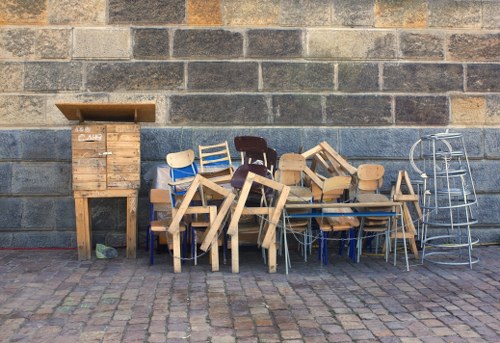
Many Borehamwood enterprises participate in targeted recycling activities relevant to the town’s mix of retail and light commercial users. These include organised textile collections to support charity shops, separated food waste collections for cafés and restaurants, and electronic waste (WEEE) pickup for local offices. The borough’s approach to waste separation supports clear bin streams and education campaigns so that Borehamwood commercial waste is cleaner and easier to process downstream. Small changes—like separate containers for cardboard and flattened boxes—lead to big increases in usable material and lower contamination rates.To accelerate reuse, our sustainable rubbish area programmes prioritise material recovery. Office fit-outs and furniture clearance are routed through partnerships that divert items to local charities and social enterprises. Partnerships with charities are central to keeping bulky goods in the community: furniture, working appliances, and surplus textiles are assessed, repaired if needed, and made available in charity shops across Hertsmere. This keeps valuable resources circulating locally while supporting social causes.
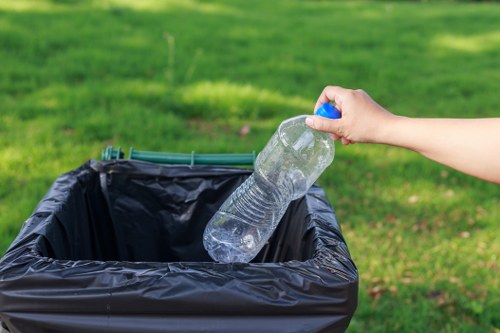 Zero-waste events and sector-specific initiatives are gaining traction in Borehamwood. Markets and events are encouraged to use reusable or compostable serviceware, and waste stations at events mirror the town’s commercial segregation standards. Collecting and processing organic waste from events reduces methane emissions and provides feedstock for local anaerobic digestion facilities, converting food waste into renewable energy and nutrient-rich digestate for agriculture.

Low-carbon collection: fleet and logistics
A defining element of sustainable commercial waste collection is the vehicle fleet. Borehamwood’s commercial waste fleets now include low-carbon vans and smaller electric collection vehicles designed for urban access and reduced noise. Route optimisation software reduces empty miles and improves consolidation at transfer stations. By prioritising low-carbon vans, hybrid roll-on/roll-off vehicles, and electric cargo vans for last-mile pickup, businesses lower their transport emissions while maintaining dependable service for commercial waste Borehamwood operations.Supply chain emissions are tackled through smarter scheduling, shared collection points for small businesses, and consolidation of loads destined for the same processing facilities. These measures not only cut carbon but also reduce costs for smaller traders who benefit from shared commercial rubbish collection services. The combined effect is a resilient local system that supports the borough’s recycling percentage target while keeping environmental impact front of mind.
Working together for a greener borough
Achieving a truly eco-friendly waste disposal area requires active collaboration: businesses, property managers, charities, and local authorities contribute. Regular audits, clear labelling, and employee training support correct separation. Lists of acceptable materials are shared with local transfer stations to ensure materials reach the right processing stream, and feedback loops help refine collection frequencies and container sizes. Commercial waste in Borehamwood is therefore not just a service but a shared commitment to sustainability, community benefit, and low-carbon operations.Key actions for businesses:
- Implement source segregation: paper/card, glass, metal, rigid plastics, organics.
- Partner with charities for textiles, furniture and surplus goods to promote reuse.
- Choose hauliers that operate low-emission vans and use route consolidation.
- Engage with local transfer stations to maximise recycling routes and reduce contamination.
- Set internal targets aligned with the borough recycling percentage target and report progress.
